AEO Marketing: Evolving Visibility for the AI-First Era
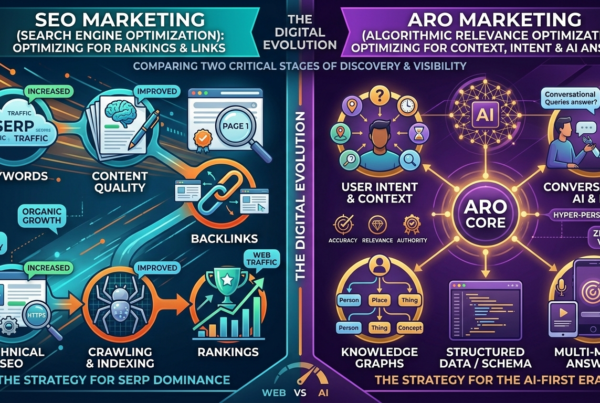
The goal of search is no longer just to provide a “list of links”—it’s to provide the direct answer. We are moving from SEO (Search Engine Optimization) to AEO (Answer Engine Optimization).
While traditional SEO focuses on ranking your website in a list, AEO focuses on making sure AI models—like Gemini, ChatGPT, and Perplexity—choose your content as the definitive answer they speak or display to the user.
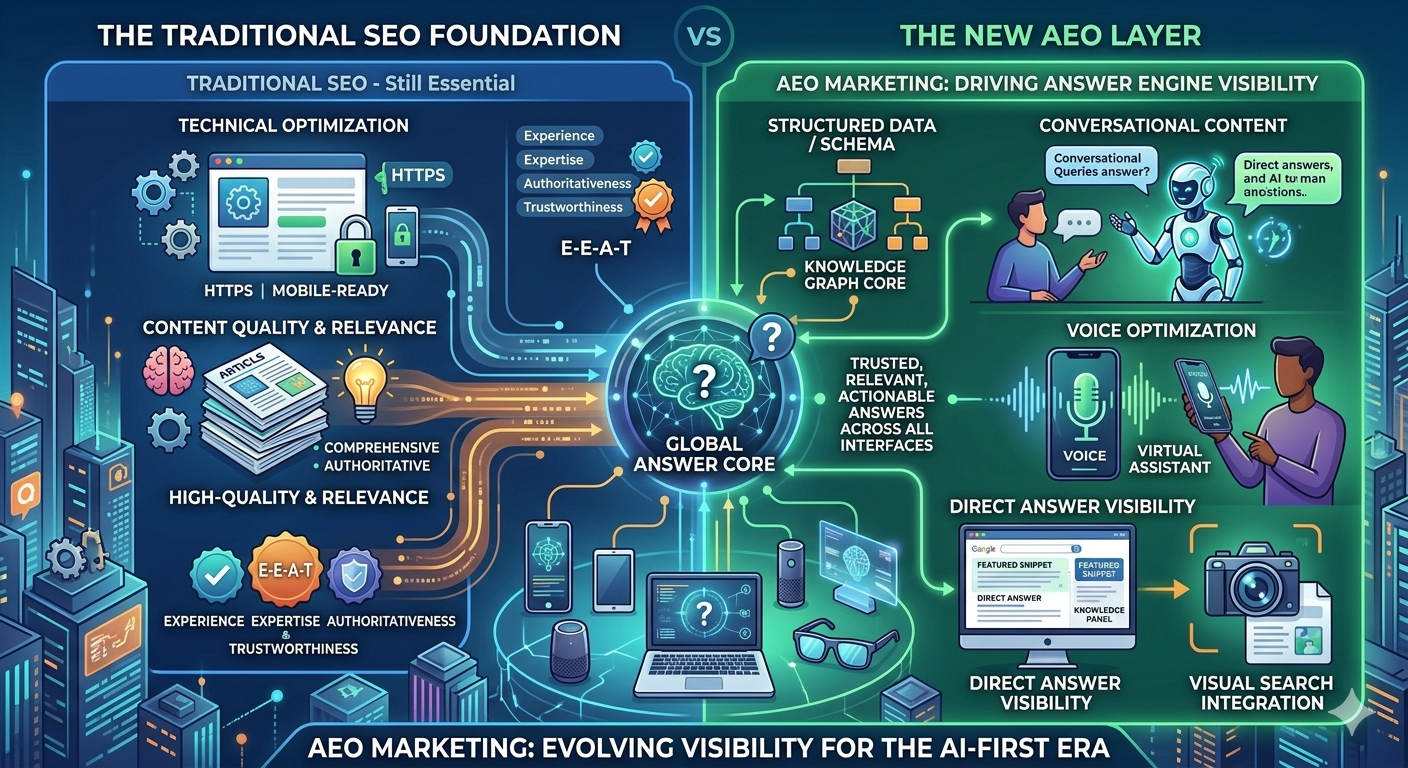
As shown in the comparison image, traditional SEO provides the foundation (technical health and quality content), but the New AEO Layer is what ensures you are visible across virtual assistants, voice search, and AI-generated snapshots.
What Makes AEO Different?
AEO requires a shift in how you structure and write your content. It’s less about keywords and more about intent and authority.
From Keywords to Conversations: People don’t search “weather Ahmedabad” in an AI world; they ask, “Do I need an umbrella today?” AEO optimizes for these natural, conversational queries.
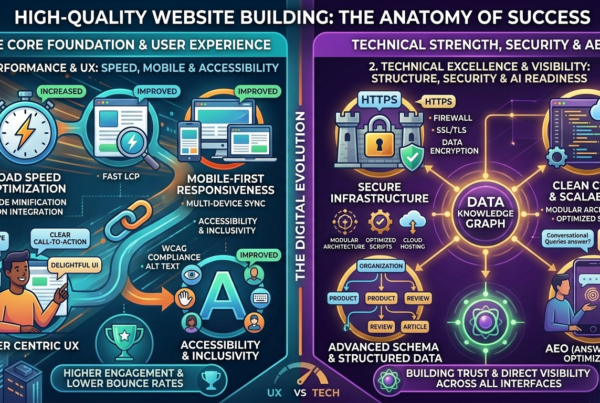
Structured Data (Schema): AI engines need to digest your data easily. Using advanced Schema markup helps machines understand exactly what your price, location, or product benefits are without “reading” the whole page.
The Power of E-E-A-T: Experience, Expertise, Authoritativeness, and Trustworthiness are now non-negotiable. Answer engines only pull from sources they deem highly credible.
Strategic Benefits of AEO
Zero-Click Dominance: Win the “Featured Snippet” or the top AI response so users get your brand’s answer immediately.
Voice Search Readiness: As more people use smart speakers and mobile assistants, AEO ensures your brand is the one being “spoken” back to the user.
Future-Proofed Brand Authority: By becoming the “source of truth” for AI engines, you build a level of trust that traditional ads simply can’t buy.
The Pillars of an AEO Strategy
To win in the AI era, focus on these three core pillars:
Direct Answer Optimization: Create “Q&A” style sections in your content that provide clear, concise answers to common industry questions.
Knowledge Graph Integration: Ensure your brand’s information is consistent across the web (social media, directories, and your site) so AI can verify your identity.
Visual Search Integration: Optimize your images and videos so AI can “see” and recommend your products during a visual search.
Strategic Pillars for AI Visibility
Conversational Logic Mapping: Designing content flows that mirror the natural “follow-up” questions users ask AI assistants.
Natural Language Processing (NLP) Alignment: Writing in a clear, declarative style that is easily parsed by machine learning algorithms.
Multi-Modal Asset Optimization: Ensuring that text, video, and data tables are all interlinked so the answer engine can provide a rich, multi-media response.
Real-Time Data Feeds: Utilizing APIs to ensure AI engines always have access to your most current pricing or availability.