In the rapidly evolving digital landscape of 2026, the architectural choices a business makes can either be its greatest launchpad or its most restrictive ceiling. As consumer behavior in the USA shifts toward “seamless connectivity,” the debate between Multi-Platform Ecosystems and Standalone Mobile Apps has moved beyond simple coding preferences. It is now a strategic crossroads that impacts brand loyalty, data synchronization, and a company’s ability to pivot in a volatile market.
While a standalone app offers a focused, high-performance experience, a multi-platform ecosystem aims to provide a unified digital thread that follows the user across devices—from smartphones and wearables to smart home interfaces and desktop environments.
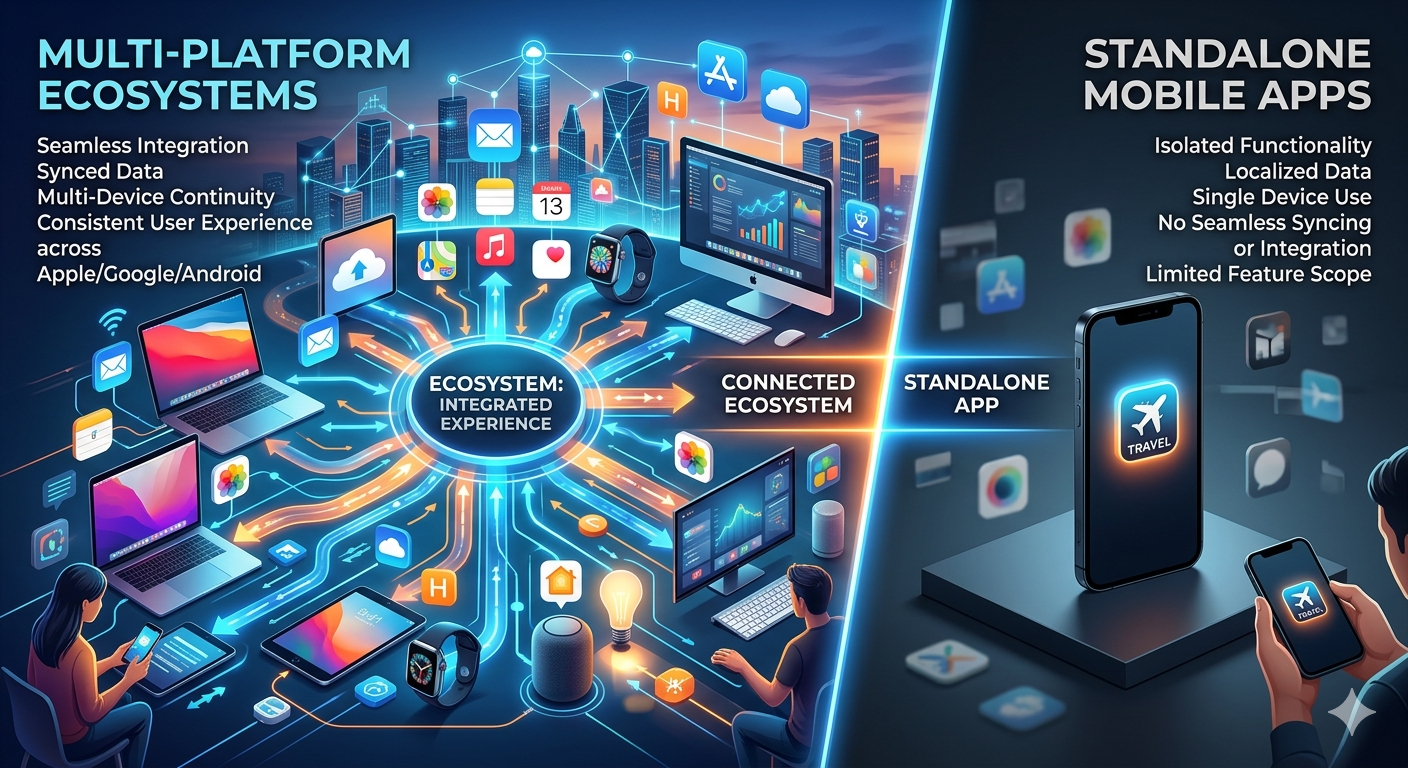
Standalone Mobile Apps
Standalone apps are built for a single platform such as iOS or Android. They are typically faster to develop and ideal for MVPs or niche use cases. However, they often lack deep integration with other systems.
Multi-Platform Ecosystems
A multi-platform ecosystem integrates mobile apps, web apps, APIs, cloud systems, and third-party tools into one connected environment. Examples include platforms like Amazon, Google, and Salesforce.
Advantages of Ecosystems
- Seamless cross-device experience
- Centralized data management
- Better scalability for enterprise growth
- Improved customer retention through unified journeys
Challenges
- Higher development cost
- Requires long-term planning