The Trust Revolution: Why Privacy-First Marketing and Zero-Party Data are Your New Superpowers
The digital marketing landscape is shifting beneath our feet. For years, marketers relied on a complex web of third-party cookies and covert tracking to build detailed user profiles. But those days are quickly fading. Driven by a combination of stricter regulations (think GDPR and CCPA), technology changes (like Apple’s App Tracking Transparency), and, most importantly, a massive surge in consumer privacy awareness, the old playbook is obsolete.
We are now in the era of Privacy-First Marketing. This isn’t just about compliance; it’s a fundamental rethink of how brands interact with their customers. It requires moving away from intrusive surveillance and towards building genuine, transparent relationships based on trust.
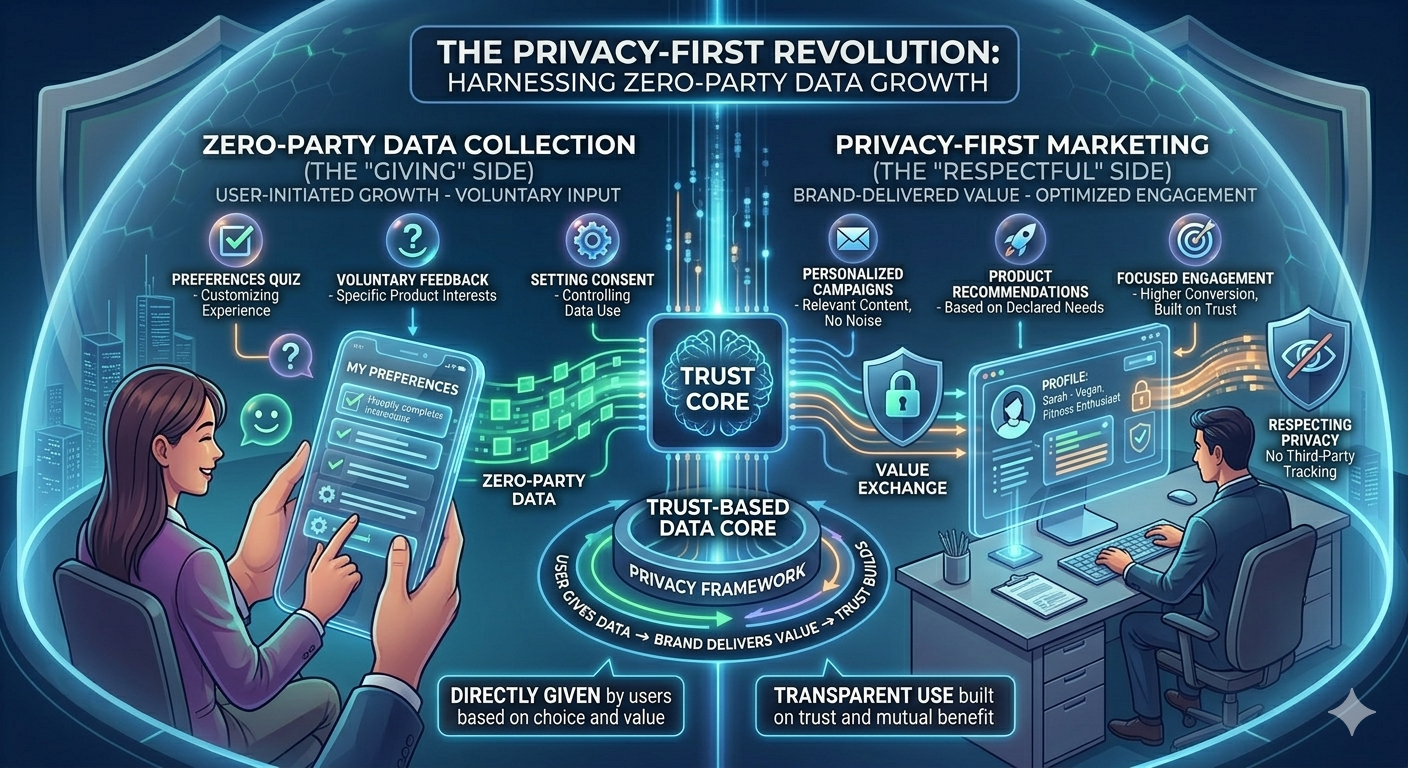
This image, “The Privacy-First Revolution: Harnessing Zero-Party Data Growth,” perfectly captures this pivotal moment. It contrasts the ‘Giving’ side of the equation—how users voluntarily share information—with the ‘Respectful’ side—how brands then use that information to deliver tailored, valuable experiences without violating privacy.
The Power of Zero-Party Data
At the heart of this privacy-first shift is Zero-Party Data. While first-party data is information you collect from user behavior on your own channels (like website visits or purchase history), zero-party data is far more potent. It is data that a customer intentionally and proactively shares with you.
Why is Zero-Party Data the Holy Grail?
Unmatched Accuracy: There’s no guesswork or inference involved. The data is straight from the source and highly reliable.
Explicit Consent: By its very nature, collecting zero-party data ensures you have clear, unambiguous consent.
Built-In Trust: Customers only share this valuable information with brands they trust. The act of sharing strengthens that bond.
Fuel for Hyper-Personalization: This granular insight allows you to move beyond basic segmentation to deliver truly bespoke content, recommendations, and offers that resonate deeply with individual needs.
Navigating the Two Sides of the Privacy Revolution
Let’s break down the two critical components of this new marketing paradigm, as visualized in our image:
1. Zero-Party Data Collection (The “Giving” Side)
The success of your privacy-first strategy hinges on your ability to motivate customers to share their data. This isn’t about trickery; it’s about a clear value exchange. You must offer a compelling reason for them to “give” you their information.
Our image highlights several effective and engaging methods:
Interactive Quizzes & Polls: Instead of a dry form, frame data collection as a value-add. A style quiz, a product recommender, or a fun personality test can entice users to share preferences while getting something useful or entertaining in return.
Preference Centers: Give customers a centralized hub where they can easily manage their communication preferences, interests, and frequency of contact. This empowers them and shows you respect their choices.
Progressive Profiling: Don’t ask for everything at once. Build trust over time. Ask for one small piece of information at a critical touchpoint (e.g., “What’s your primary fitness goal?” after they download a workout guide) and gradually build a complete profile.
Surveys & Feedback Loops: Proactively ask for opinions on products, services, or content. This not only gathers zero-party data but also makes customers feel heard and valued.
2. Privacy-First Marketing (The “Respectful” Side)
Collecting the data is only half the battle. How you use it is what truly defines your commitment to privacy. The “Respectful” side of marketing is about honoring the trust customers have placed in you and using their data responsibly to enhance their experience.
The image showcases how this data can be put to work:
Hyper-Personalized Content: Move beyond generic email blasts. Use zero-party data to tailor email subject lines, body copy, and suggested resources based on expressed interests.
Curated Recommendations: Offer product suggestions or content recommendations that are genuinely relevant. “Because you told us you love trail running, here are our new all-terrain shoes,” is infinitely more powerful than a generic “You might also like.”
Value-Driven Engagement: Shift the focus from purely transactional messaging to relationship-building. Deliver educational content, exclusive insights, or community events that align with the interests customers have shared.
Transparent Data Usage: Be upfront about how you’re using customer data. A simple, clear statement like, “We’re showing you this collection based on your preference for sustainable materials,” reinforces transparency and trust.
Trust is the New Currency
The transition to privacy-first marketing isn’t a temporary trend; it’s the new standard. Brands that continue to rely on antiquated, invasive tracking methods will find themselves losing customer trust and, ultimately, market share.
By embracing the power of zero-party data and committing to a respectful, value-driven approach, you can build a marketing engine that is not only compliant and resilient but also deeply effective. It’s a win-win: customers get the personalized experiences they desire while retaining control over their privacy, and brands build the enduring trust that is the foundation of long-term success. The privacy revolution is here—make it your superpower.